Jet Airways on Thursday said it would introduce more flights on both its domestic and international networks.

Benchmark indices settled lower on Friday, with the Sensex declining 111 points on the back of a sharp fall in index heavyweight Reliance Industries. The BSE benchmark went lower by 111.01 points or 0.21 per cent to settle at 52,907.93. During the day, it tanked 924.69 points or 1.74 per cent to 52,094.25. The NSE Nifty dipped 28.20 points or 0.18 per cent to close at 15,752.05.
'We should have calmed down the child. We will do an internal analysis on that.'
India's aviation industry could return to profitability in 2023-24 for the first time since the pandemic. The industry may pare aggregated net loss by 75-80 per cent year-on-year (YoY) to between Rs 3,500 crore and Rs 4,500 crore in 2022-23 (FY23), compared with Rs 17,500 crore of net losses in 2021-22 (FY22). A combination of recovery in passenger volumes and easing cost pressures due to stable fuel and foreign exchange (forex) costs could spark a turnaround. CRISIL says domestic and international passenger traffic recovered to 90 per cent and 98 per cent, respectively, of pre-pandemic traffic (2019-20, or FY20), in April-December 2022, compared with April-December 2019.

Boeing 737 MAX planes were globally grounded in March 2019, after two of these crashed within five months, raising safety concerns.
Brent crude oil prices may rise to $110 a barrel in 2023, up nearly 33 per cent from the current levels, said analysts at Morgan Stanley, in a recent note. This is, however, lower than the peak level of nearly $127 touched earlier in 2022 as geopolitical concerns took centre stage amidrising demand. "Looking ahead, Brent oil price growth will decelerate even more in the coming quarters. "This comes even as our global oil strategist expects a rise in oil prices back to $110 a barrel by the second half of 2023.
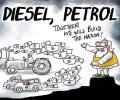
Petrol and diesel sales in the country fell in July over the previous month as the onset of monsoon chipped away demand in some sectors and restricted mobility, preliminary industry data showed. Diesel, the most widely used fuel in the country, saw consumption drop 13.1 per cent to 6.44 million tonnes from 7.39 million tonnes of demand in June. The arrival and intensity of monsoon weigh heavily on diesel demand in the country and consumption traditionally is lower in July-September than in April-June.
Sources privy to the development said Maran was being asked to take care of a part of the liabilities.

'The present generation, either due to historical amnesia or political propaganda, has been fed a narrative that paints India as an adversary rather than an ally.'
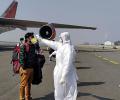
The domestic passenger traffic in July 2021 was 51 lakh, ICRA said in a release. Domestic passenger traffic on a year-on-year basis, however, spiked around 131 per cent over August 2020 traffic of 28.3 lakh, it said. The ratings agency said despite the continued recovery in the previous month, there is continued stress on demand, driven largely by the second wave of the pandemic, limiting travel to only necessary travel.

At 15.05 PM, the 30-share Sensex was up 281 points at 28,238 and the 50-share Nifty gained 86 points at 8,577

The airline will induct four more Dreamliners next year to complete order of 27 of these aircraft

High airline turbine fuel prices and pressure to cut down carbon emissions have forced airlines to look at renewable sources of energy to power their jets.
The increase in prices of jet fuel by about nine per cent would put an additional burden of Rs 550 crore (Rs 5.5 billion) on national carrier Indian and the airline has asked the government to consider levying a fuel surcharge on air travel or hiking
The government on Friday slapped an export tax on petrol, diesel and jet fuel (ATF) while also joining nations like the UK in imposing a windfall tax on crude oil produced locally. A Rs 6 per litre tax on export of petrol and ATF and Rs 13 per litre tax on export of diesel is effective from July 1, finance ministry notifications showed. Additionally, a Rs 23,250 per tonne tax was levied on crude oil produced domestically.

To make space for the extra row, Vistara has opted for the smartLav concept offered by Airbus

Volumes are up over 20 per cent y-o-y in January-April.
Prices of tickets booked three days prior have soared 70% over last summer's fares

Issues raised by the industry, like rationalisation of the eight per cent central excise on jet fuel, still remain to be addressed. As a result of the government abolishing five per cent customs duty on aviation turbine fuel from Tuesday, state-run oil firms have cut jet fuel prices by Rs 2,100 per kilo litre, on top of the 17 per cent price reduction announced late last week.

In an unprecedented show of solidarity on Friday in Mumbai, India's cash-strapped, loss-making private airlines -- including Kingfisher Airlines, Jet Airways, and others -- have demanded a bailout package from the government or they 'will have to suspend their operations indefinitely'.
The crude oil rally will impact prices of aviation turbine fuel, which forms 30 per cent of the operating cost for an airline. The company incurred a loss of $23.1 million during the October-December quarter of FY08. This was against a net profit of $9 million during the corresponding quarter of 2006-07.
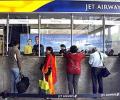
Airfares are at an all-time low because of fall in crude oil prices.

But the Abu Dhabi-based airline would first bolster its own network with traffic from India before Jet's turnaround.
The hike in aviation turbine fuel prices is likely to lead to a 10-14 per cent increase in fares on metro routes and long-haul flights. The oil companies hiked ATF prices by 14 per cent as a result of global rise in crude oil prices over the last few months. Now, most airlines, including Jet Airways and SpiceJet, are looking at imposing a differential surcharge - a smaller increase on shorter routes than longer routes.
The events, trends, and goofs that defined 2008
The end of the monopoly of oil PSUs on selling jet fuel at Delhi and Mumbai airports is expected to bring competition and more transparent pricing.
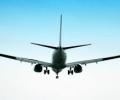
ATF for domestic carriers has become 11.22 per cent cheaper since October and is expected to see more price cuts in the next three months.

Higher economic growth and affordability will help Indian aviation firms register strong growth.

The national carrier, which is already struggling with its fuel payments, spends Rs 6,000-7,000 crore annually on fuel. A 10 per cent hike in crude price would mean over Rs 50-58 crore of extra costs for the airline.
Following on the footsteps of Indian Airlines, two leading private carriers Jet Airways and Air Sahara on Monday announced increase in fares in all sectors by 12 per cent from April 15.
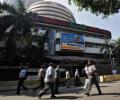
Broader market outperformed the frontline indices with the Smallcap and Midcap gaining up to 1%

Naresh Goyal, after being ousted with his wife from the board last week, and with his shareholding halved to 25 per cent, can still make a comeback by partnering a new investor and win back majority control.
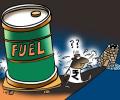
India's climate change goals are turning combustible. On the one hand, a protracted dispute between the government and manufacturers over subsidies threatens to slow the pace of electric vehicle (EV) sales. On the other hand, repeated assertions by different arms of the government over banning sales of new fossil fuel-fired vehicles have queered the pitch for energy investments. Before we address the issue of the recommended diesel vehicle ban in the recent report on energy transition, issued months before the next round of global climate talks begin in Dubai in November, let's look at what's at stake.

Currently most of its 119 planes have been taken back by the lessors and many have been leased to other airlines like SpiceJet. The second challenge is that it has to repay banks.
Experts expect a net loss of Rs 26.7 billion for IndiGo and Rs 10.1 billion for SpiceJet in Q1FY21 driven by low traffic volume, low fleet utilisation and poor coverage of fixed costs.
Rising prices of food items, jet fuel and alcohol pushed up inflation marginally for the second consecutive week, to 5.64 per cent.
To take delivery of 50 from 2017 and in talks to lease five Airbus planes to Kuwait Airways.
